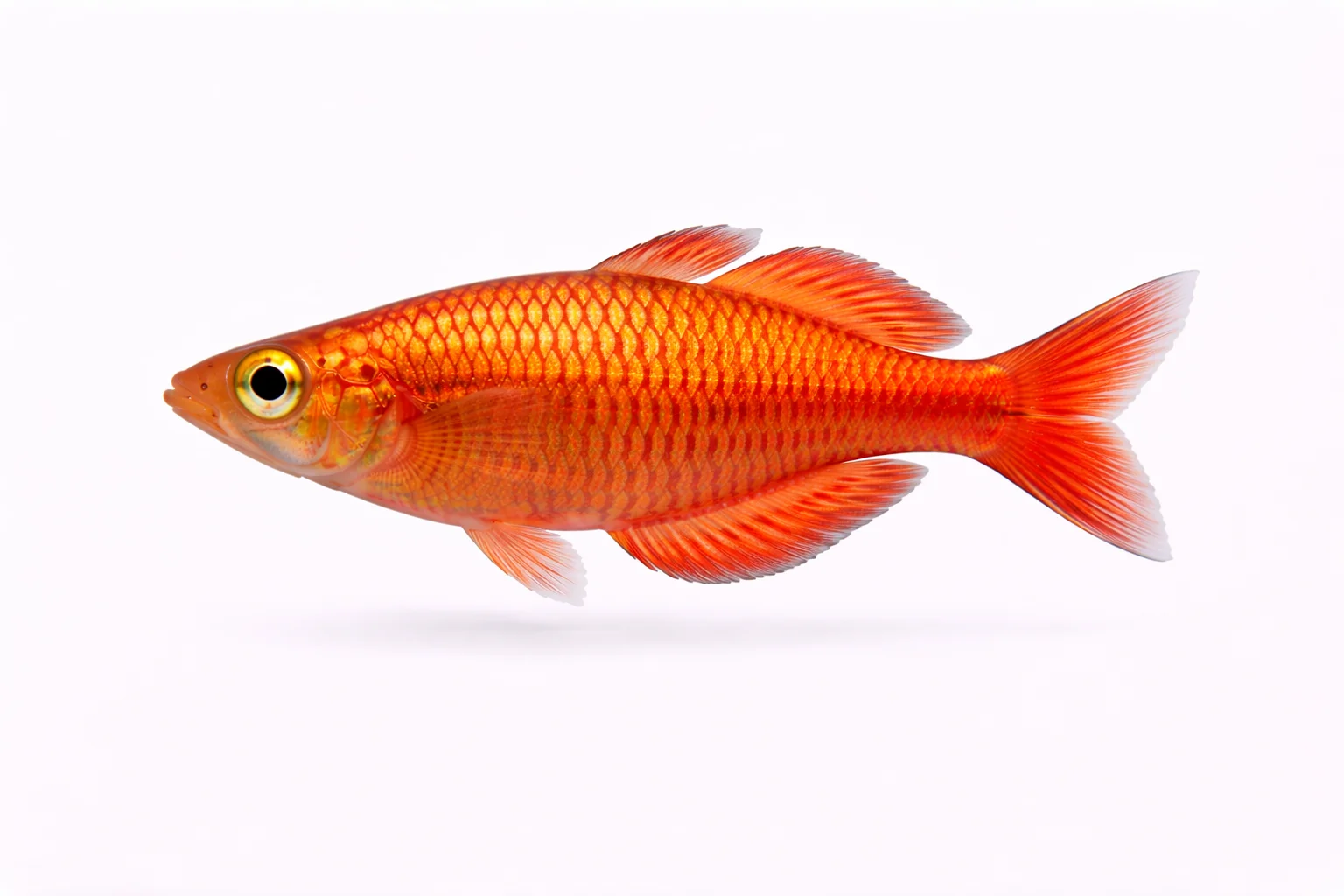
Red Irian Rainbowfish
Glossolepis incisus
Minimum Tank
55 Gallons
Adult Size
6 inches
Temperature
72-77°F (22-25°C)
pH Range
7.0-8.0
Lifespan
8 years
School Size
6+ fish
About Red Irian Rainbowfish
The red Irian rainbowfish is a large, magnificently colored species from the shallow lakes and streams of Papua, Indonesia. Males develop a deep, warm red coloring over their entire body that intensifies with age and dominance, making mature specimens among the most vividly red freshwater fish available. Females and juveniles are silvery-olive with subtle red hints. At up to 6 inches, they are one of the larger commonly kept rainbowfish species. Red Irian rainbowfish are active, social fish that engage in dramatic morning display rituals, with dominant males showing their most intense red coloring. Their bold color and active nature make them a stunning centerpiece school for large community aquariums.
Care Requirements
Tank Setup
- • Minimum 55-gallon tank required
- • Temperature: 72-77°F (22-25°C)
- • pH: 7.0 - 8.0
- • Category: Rainbowfish
Diet & Feeding
- • Diet type: Omnivore
- • Feed 1-2 times daily
- • Varied diet recommended
Tank Mate Compatibility
Compatible With
Avoid Keeping With
Care Tips
Expert Tips
Red Irian rainbowfish need a large tank of at least 55 gallons with ample swimming space. Keep them in groups of at least six with more females than males to reduce competition. They prefer slightly alkaline, moderately hard water at 77-86°F. Males develop their deepest red coloring after about two years, so patience is required with young specimens. Feed color-enhancing foods including spirulina, carotenoid-rich pellets, and frozen brine shrimp to bring out their red tones. Strong filtration and regular water changes maintain the clean conditions they require. They are peaceful community fish that pair well with other large, active species. Provide both open swimming areas and planted sections.
Quick Facts
208L
Min Tank (55gal)
15cm
Adult Size (6")
8yr
Lifespan
6+
Min School
Build Your Perfect Community Tank
Find compatible tankmates for your Red Irian Rainbowfish
Related Species You Might Like
Boesemani Rainbowfish
Melanotaenia boesemani
Turquoise Rainbowfish
Melanotaenia lacustris
Madagascar Rainbowfish
Bedotia geayi
Celebes Rainbowfish
Marosatherina ladigesi
Forktail Blue-Eye Rainbowfish
Pseudomugil furcatus
Spotted Blue-Eye Rainbowfish
Pseudomugil gertrudae
Tank Mates for Red Irian Rainbowfish
Species from our database with overlapping water parameters, compatible temperaments and a realistic shared tank size.
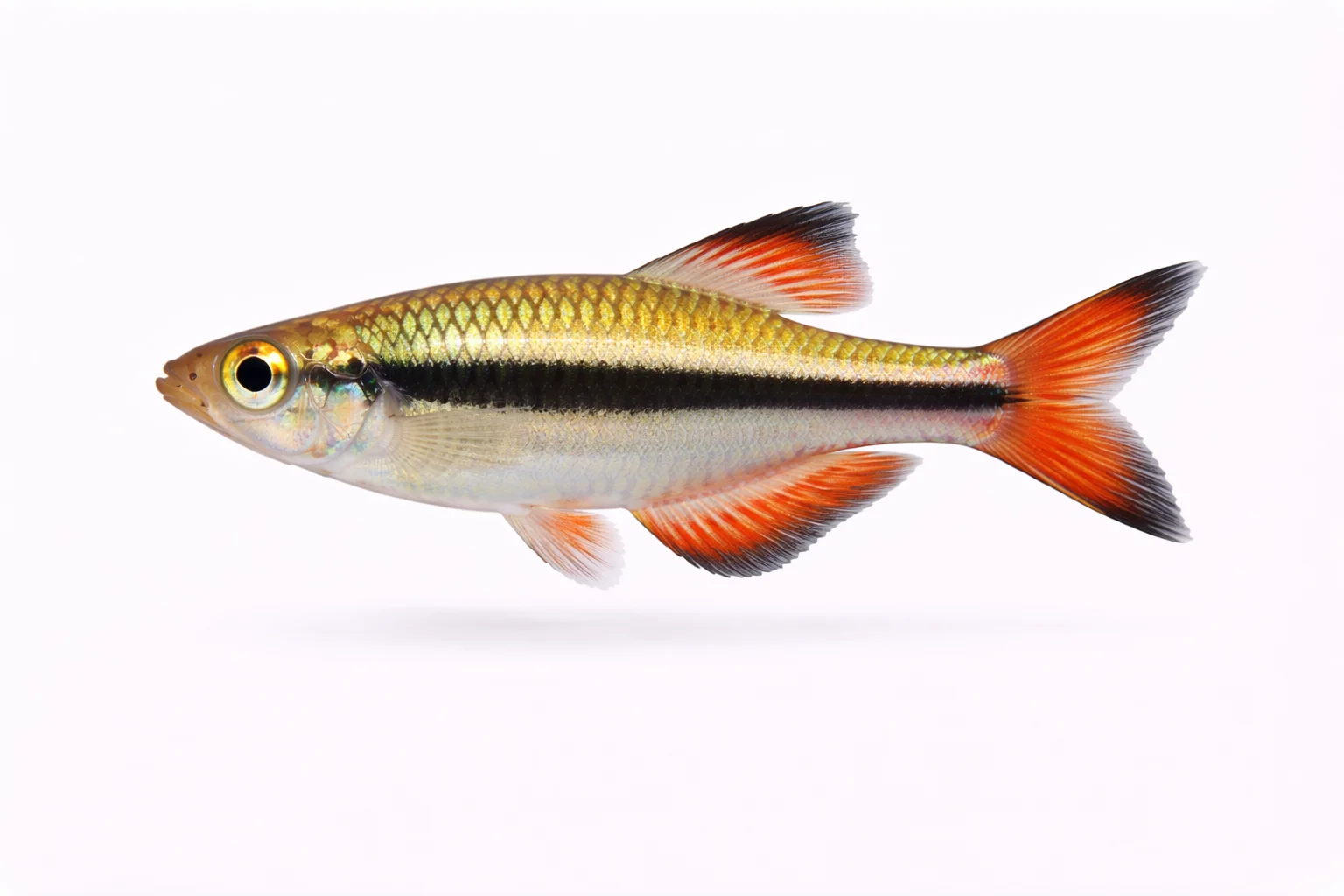 Madagascar Rainbowfish
Bedotia geayi
moderate · 40+ gal
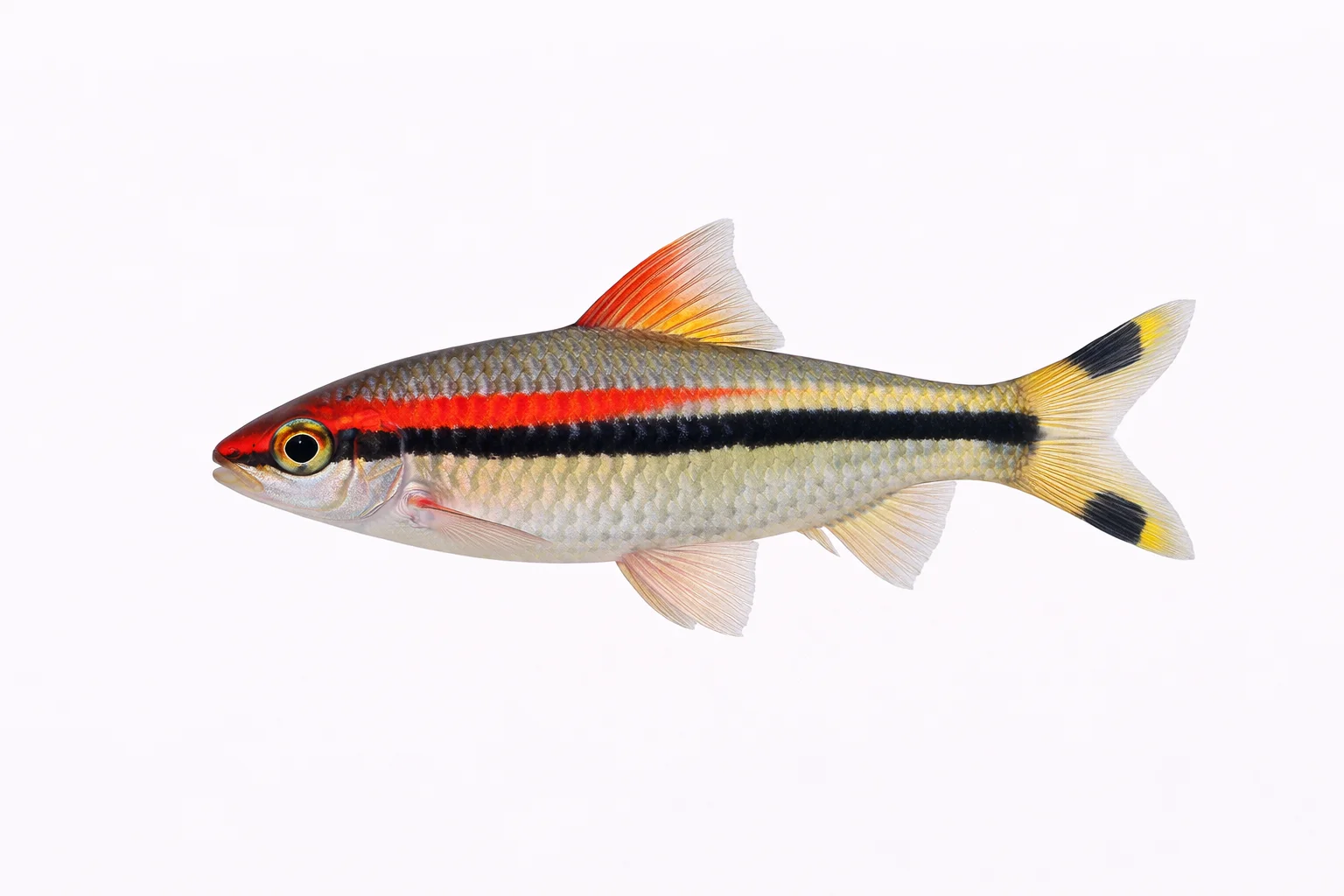 Denison Barb
Sahyadria denisonii
moderate · 55+ gal
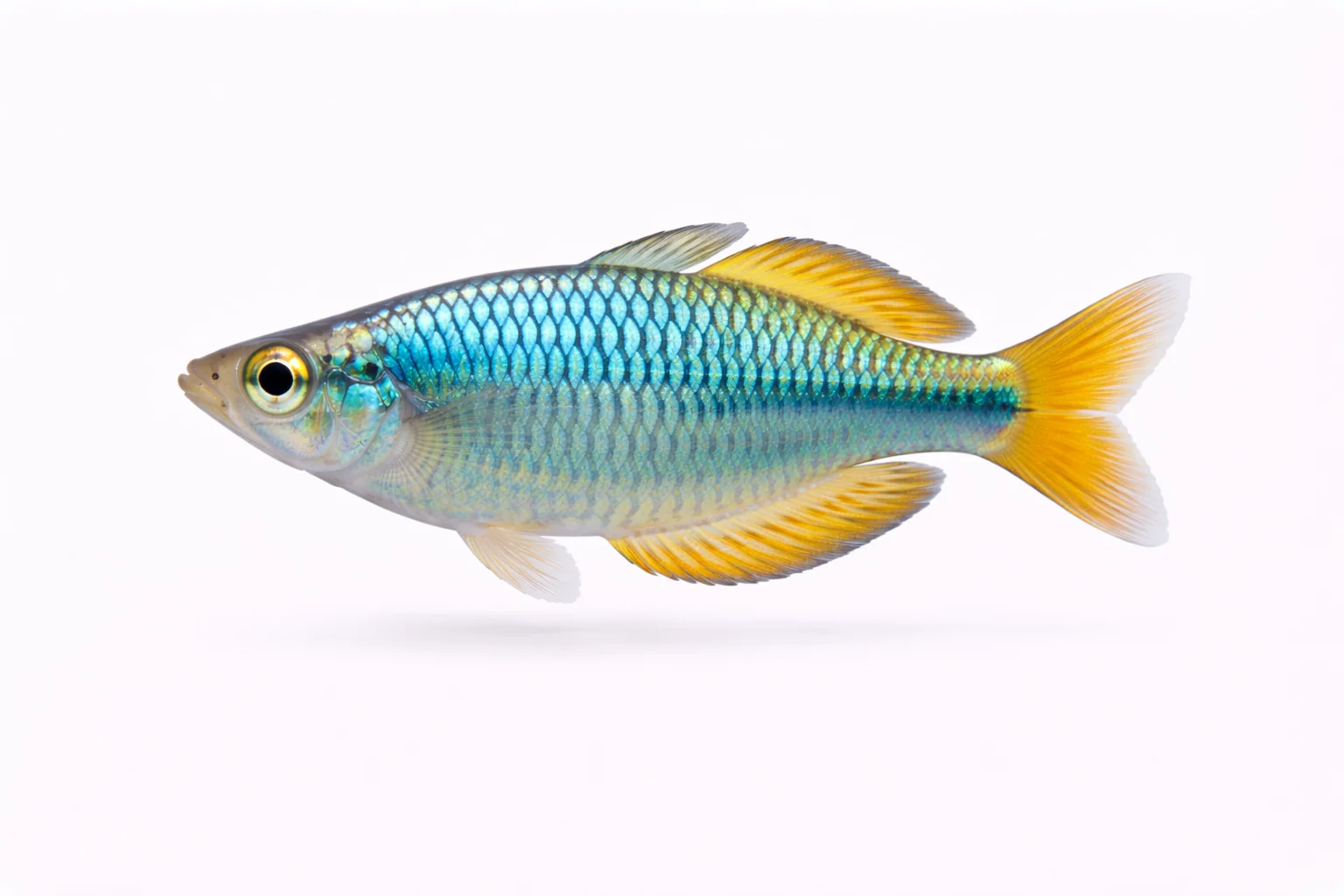 Turquoise Rainbowfish
Melanotaenia lacustris
moderate · 30+ gal
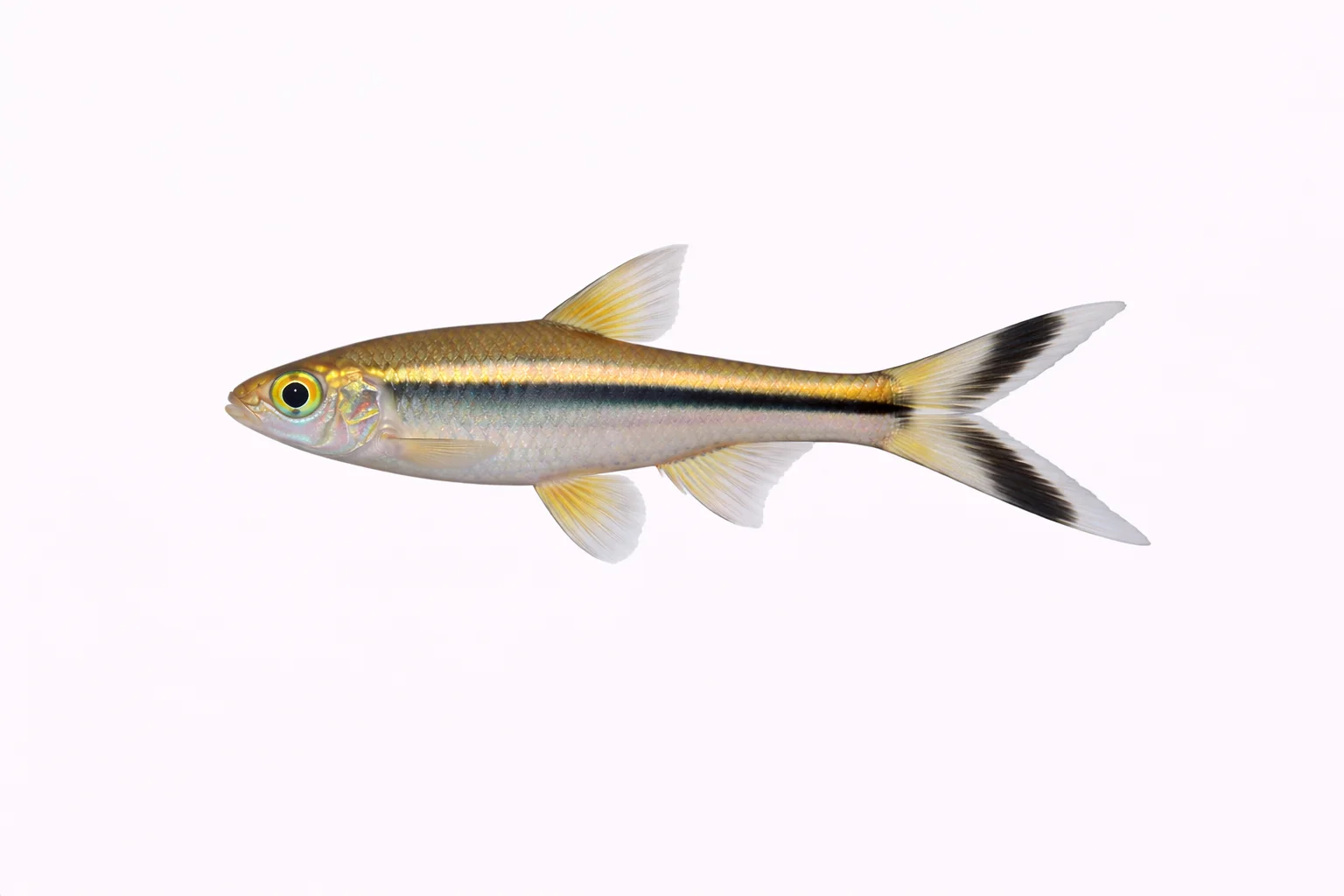 Scissortail Rasbora
Rasbora trilineata
easy · 30+ gal
Similar Care Level
Other moderate-care species that suit a comparable setup.
Frequently Asked Questions
What size tank does a Red Irian Rainbowfish need?
A Red Irian Rainbowfish needs a minimum tank size of 55 gallons (208 litres). They should be kept in schools of at least 6.
What water parameters does a Red Irian Rainbowfish need?
Red Irian Rainbowfish thrive in water between 72-77°F (22-25°C) with a pH of 7.0-8.0.
Are Red Irian Rainbowfish easy to care for?
Red Irian Rainbowfish are considered moderate to care for. They are peaceful fish with a lifespan of about 8 years.
How big do Red Irian Rainbowfish get and what do they eat?
Red Irian Rainbowfish reach about 6 inches and are omnivores. Red Irian rainbowfish need a large tank of at least 55 gallons with ample swimming space. Keep them in groups of at least six with more females than males to reduce competition. They prefer slightly alkaline, moderately hard water at 77-86°F. Males develop their deepest red coloring after about two years, so patience is required with young specimens. Feed color-enhancing foods including spirulina, carotenoid-rich pellets, and frozen brine shrimp to bring out their red tones. Strong filtration and regular water changes maintain the clean conditions they require. They are peaceful community fish that pair well with other large, active species. Provide both open swimming areas and planted sections.